
Dates: c. 1080-1134
Feast Day: June 6
Patron Saint of: Expectant Parents,
Parents Who Desire to Conceive a Child
Canonized by: Pope Gregory XIII on July 28, 1582

Our Holy Father, Norbert of Gennep, a secular canon of the Church of Xanten and chaplain to the Emperor, became inflamed with the love of Christ and thereafter gave himself totally to the reform of the Church. After priestly ordination he freely took up the Lord’s call as an itinerant apostolic preacher. Afterwards, with the encouragement of Pope Callistus II and the assistance of Bartholomew, Bishop of Laon, he gave himself to the founding of the monastery and Order of the Canons Regular of Premontre in the diocese of Laon.
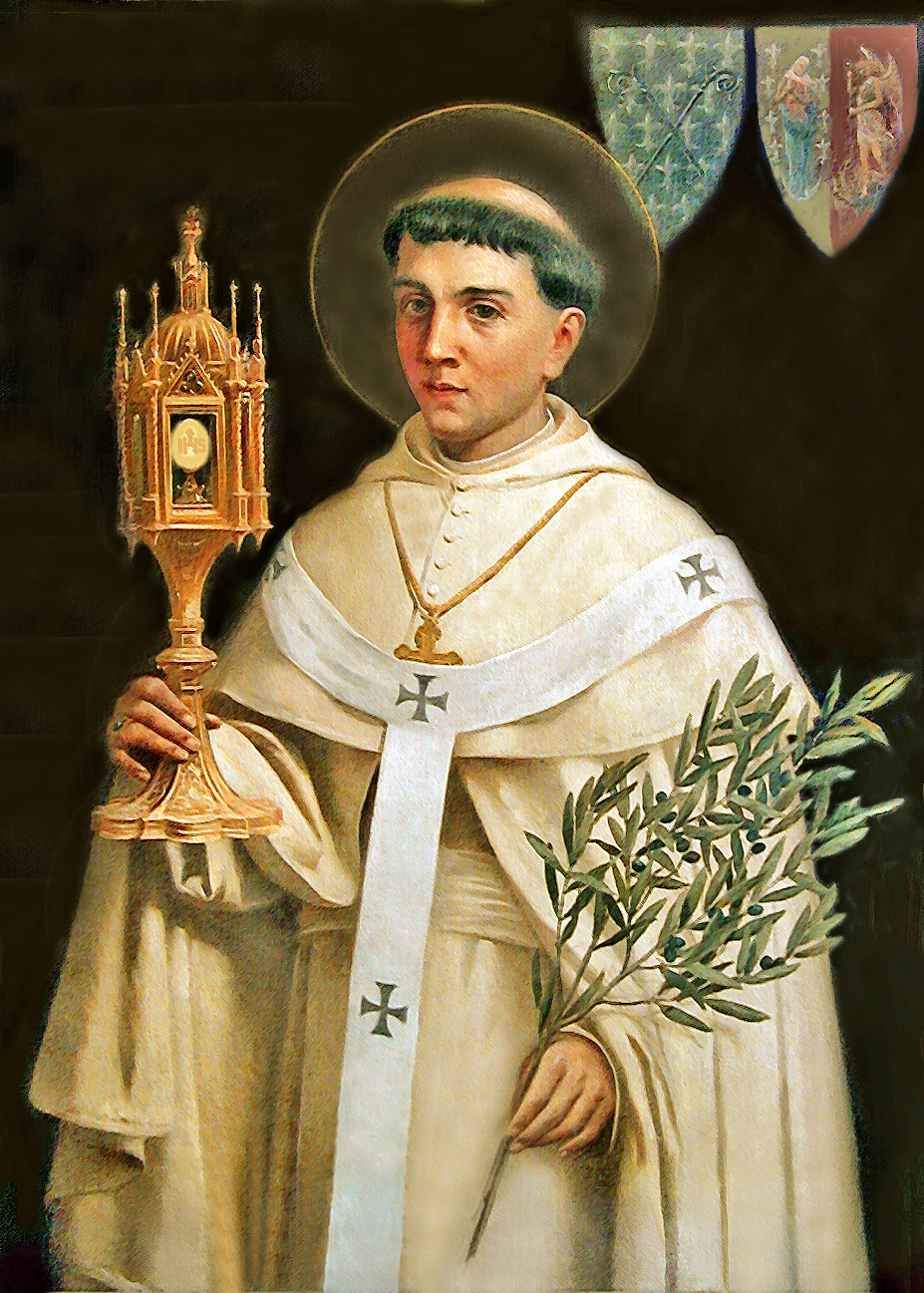


"You would do well to consult Norbert.
He is, as we all know, closer to God than we are."
-St Bernard of Clairvaux
It is rare to find a historian motivated by deep faith who also possesses
the literary craft of a novelist, yet that is precisely the gift that we
encounter in Fr. Dominique-Marie Dauzet in Eternal Pilgrim (originally
published as Petite Vie de Saint Norbert and awarded the Montyon Prize
by the Académie Française).
Click here to order this book...
 The Life of Saint Norbert, a translation of the ancient “Vita Norberti
B,” honors Saint Norbert and his first followers on the occasion of
the ninth centenary of the establishment of the Order on Christmas
Day 1121, at Prémontré, France.
Click here to order this book...
 A clear and compelling discussion of the early development of
Norbertine spirituality during the Middle Ages, drawing from the
lives of St. Norbert and his early followers, the works of two major
Norbertine spiritual writers, Philip of Harvengt and Adam Scot, and
various aspects of medieval Norbertine life and devotional practice.